

- August 19, 2026
- Posted by: WebAdmin
- Category: Blog
In one Ugandan refugee settlement, families who once queued for rations are farming, sewing and trading their own way toward self-reliance. A World Humanitarian Day story about what becomes possible when lifesaving assistance is paired with the tools, skills and opportunities to build a future.
NAKIVALE SETTLEMENT, ISINGIRO DISTRICT
For two years, Natalia measured hunger by the kilo. When the family ration ran short, she would cut a single kilogram of maize in two, so it could last three weeks, and her eight children ate once a day. She had fled the war in the Democratic Republic of Congo in 2022, crossed into Uganda at Nyakabande, and been settled in Nakivale with a small piece of land, a few tarpaulins and saucepans, and the hard discovery that being a refugee makes a fresh start difficult to find.
Natalia is one of thousands in Nakivale for whom food assistance was the thin line between getting by and going without. For a while the World Food Programme rations held. Then they were cut, families sorted into categories, and her share fell to about forty kilograms of maize, a litre of oil and a cup of salt, gone in two weeks. When the food was later replaced with a small monthly transfer, the line sometimes failed, and she sent her children to herd cattle and gather firewood while she went to dig in the host community. Across the settlement, the story rhymed. The food kept people alive. But for families trying to rebuild their lives, survival was only the beginning; they needed a way to turn it into stability.
The turn came when people began walking the villages, asking families what they needed, and then acting on it. Through CARE, its partner Tumaine and the Church of Jesus Christ of Latter-day Saints, profiled families received food that actually held, for eight months from 2024. But the families asked for more than food. They asked to be trained so they could feed themselves. That request became EFASeR. Working through the Directorate of Possibility, with CARE and AFI, households were organised into groups of thirty and offered four paths: cultivation, livestock, tailoring, or soap. Across Nakivale, thirty-six groups formed, and around nine hundred households set out on the road from assistance toward self-reliance.
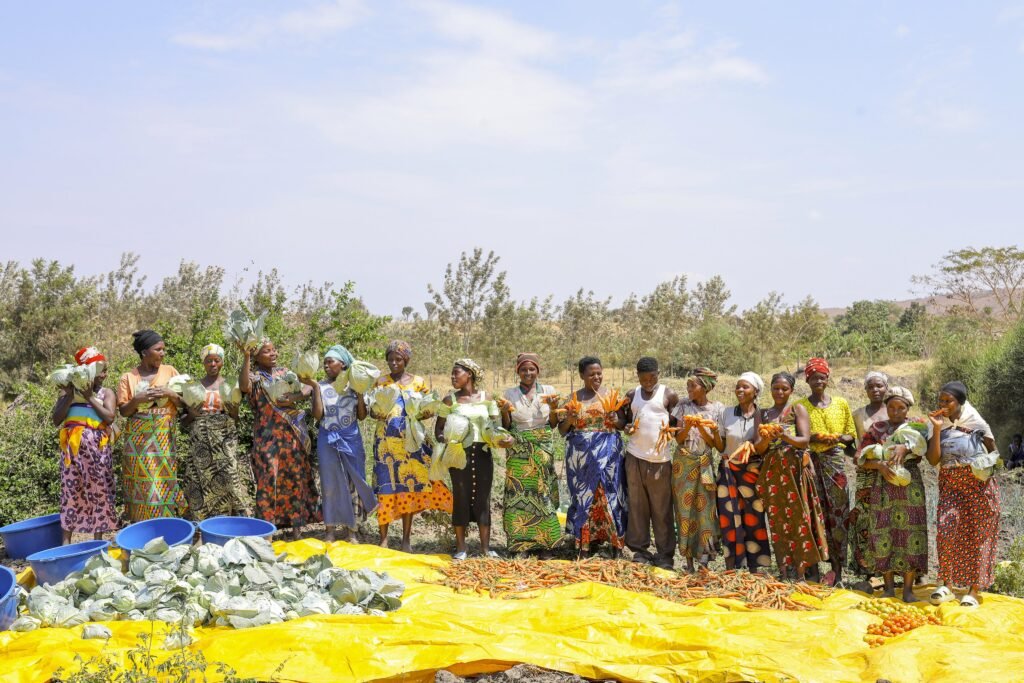
Natalia chose cultivation, so her home would not run short, and her group of thirty-one made her their chairperson. They learned to dig trenches, read the seasonal calendar, and save together, and the cabbages standing in the garden are her proof. “These cabbages came from the training,” she says. “We learn, then we practice.” The group did more than grow food; it turned strangers into neighbours. Members arrive each week carrying water for the plots, and when one of them falls behind, the others carry her slowly rather than leave her. The change reached inside her home. Her husband, Silverano Imemenyimana, remembers when the two of them saved separately and the house was full of conflict; now, he says, they plan, save and report to each other, and have bought their first pigs and hens.
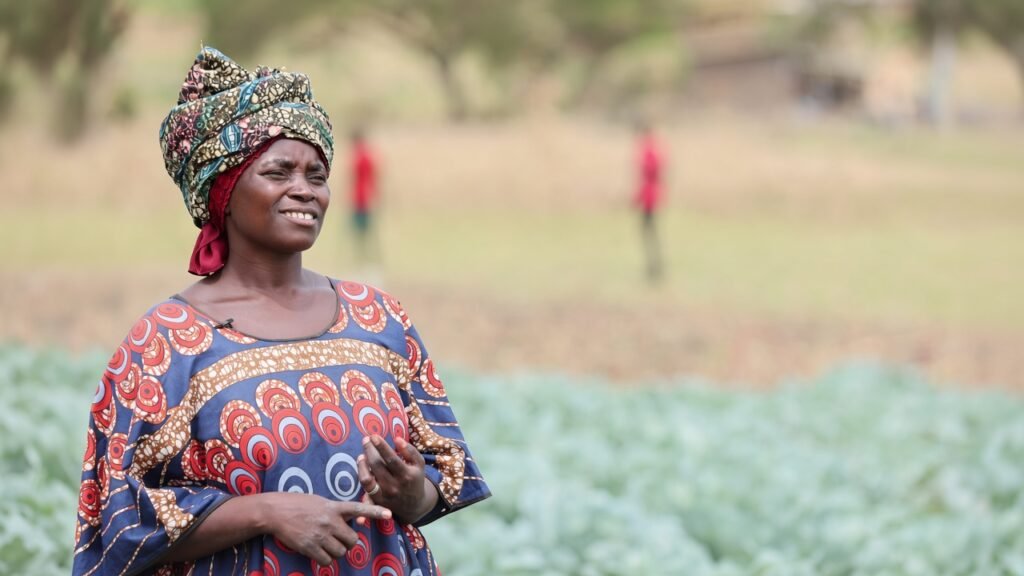
“I did not know a husband and wife could work together and be happy. Now I have seen it.” Natalia.
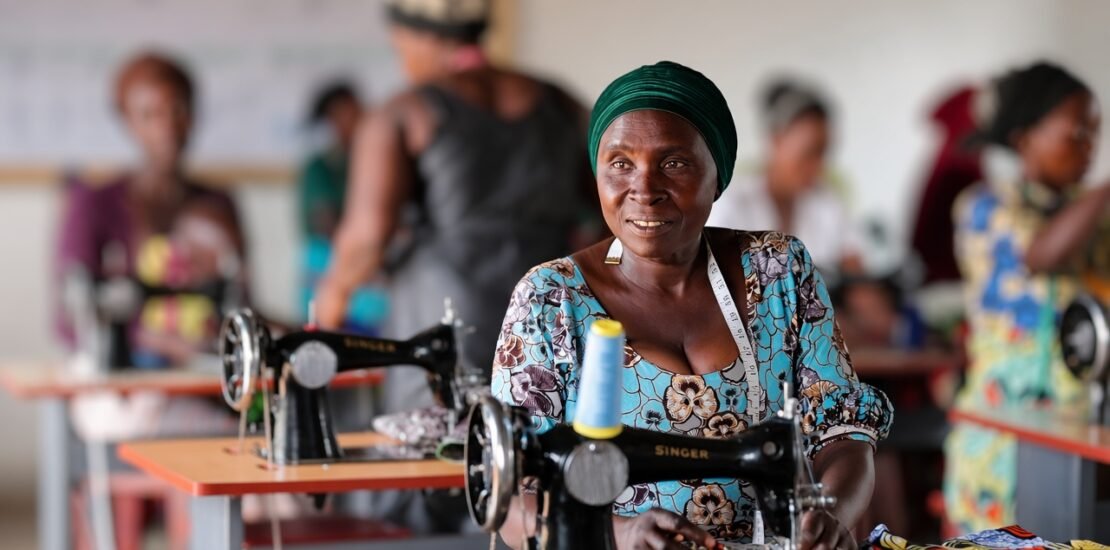
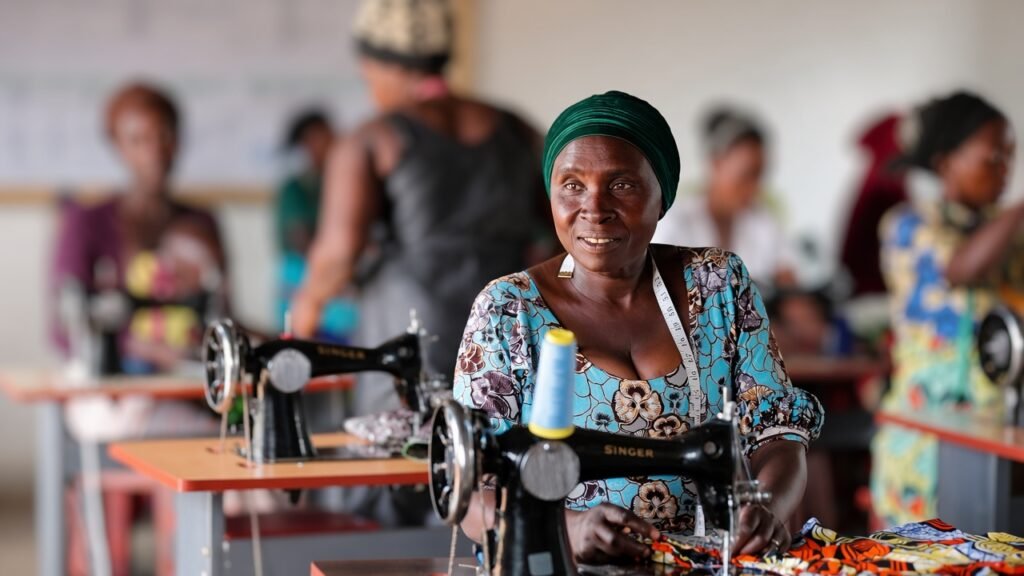
A short way off, Oliva made a different bet. Alone with her children and no husband, she argued to her tailoring group that they should choose sewing, for one reason. “That knowledge stays in your head,” she says. “Even if you move, you take your machine and continue.” For a woman who had already lost one home, a skill nobody could seize was worth more than any handout. Now a week cannot pass without her earning, and no child of hers is sent home from school.
In the Juru zone, Amani Munyakazi looked at a goat and counted more than meat. His group chose livestock because the soils are poor and the drought long, and because the droppings feed the gardens, which feed families and the market. As chairperson he carries the training back to his members, and it has even changed his family’s table. “We used to eat beans from Monday to Sunday and think we were building our bodies,” he says. “Now we eat differently.”
“If you give me one goat, next time you come, find me with ten.”
Amani
For Shantal, who as a new arrival worked in other people’s fields for food, the soap her group makes has become a measure of independence. She chairs its production and runs a phone-cover business of her own, grown with a group loan she stood up and asked for in front of her peers. “Being engaged as women helps us support ourselves, and not wait on our husbands,” she says. Pascal, the group’s secretary, remembers the December phone call that first offered food. It led to soap, fifty bars a week, savings, and two goats. And it led somewhere the hungry years would never have allowed: he is writing five books he means to publish.
What makes any of this last is not one skill or one goat, but the way the pieces connect. Manure from the livestock groups feeds the gardens; the gardens feed families and stock the market; savings turn into loans that grow a business; a trade learned once keeps on earning. The Directorate of Possibility, CARE and their partners built the scaffolding, the groups, the savings, the market links, and the community has taken it from there.
Nakivale’s story is unfolding against a wider strain. Around the world, humanitarian needs are rising while the funding to meet them shrinks, forcing hard choices about who is helped, and for how long. In that squeeze, these families are making an argument of their own: that the most powerful response is not only the one that helps people survive today, but the one that helps them build tomorrow.
The timing gives the work its edge. The World Food Programme has ended general food support in Nakivale; only the most vulnerable still receive rations. For families like Natalia’s, self-reliance is no longer an aspiration but the only road left. That is the quiet argument these families make on World Humanitarian Day: the measure of humanitarian action is not only how long people receive support,
but whether that support helps open a path toward greater choice, dignity and self-reliance. Ask them what comes next, and they answer for themselves. Natalia wants to stop begging and stand on her own. Oliva wants to sew suits and draw customers from Kampala. Amani wants ten goats. Pascal wants to see his name on a book. Uganda gave them safety; the project gave them an opening; what they do with it is theirs.
On World Humanitarian Day, the families of Nakivale are not asking to be defined by their displacement. They are asking to be seen for what they are becoming: farmers, tailors, livestock keepers, soap makers, savers, parents, a writer. The food that kept them alive did its work. What is growing now is harder to deliver and more powerful to keep: the confidence to shape their own future.
The EFASeR self-reliance component is implemented by CARE International in Uganda with the Directorate of Possibility and AFI, funded by The Church of Jesus Christ of Latter-day Saints, in the Nakivale settlement managed by OPM with UNHCR.
Thank you to all who supported us on this journey, including the untiring colleagues at CARE International in Uganda.
