"I was isolated. Now I can play with other people."
- October 2, 2026
- Posted by: WebAdmin
- Category: News
How TeamUp is helping children in Nakivale find friendship, routine and a sense of belonging
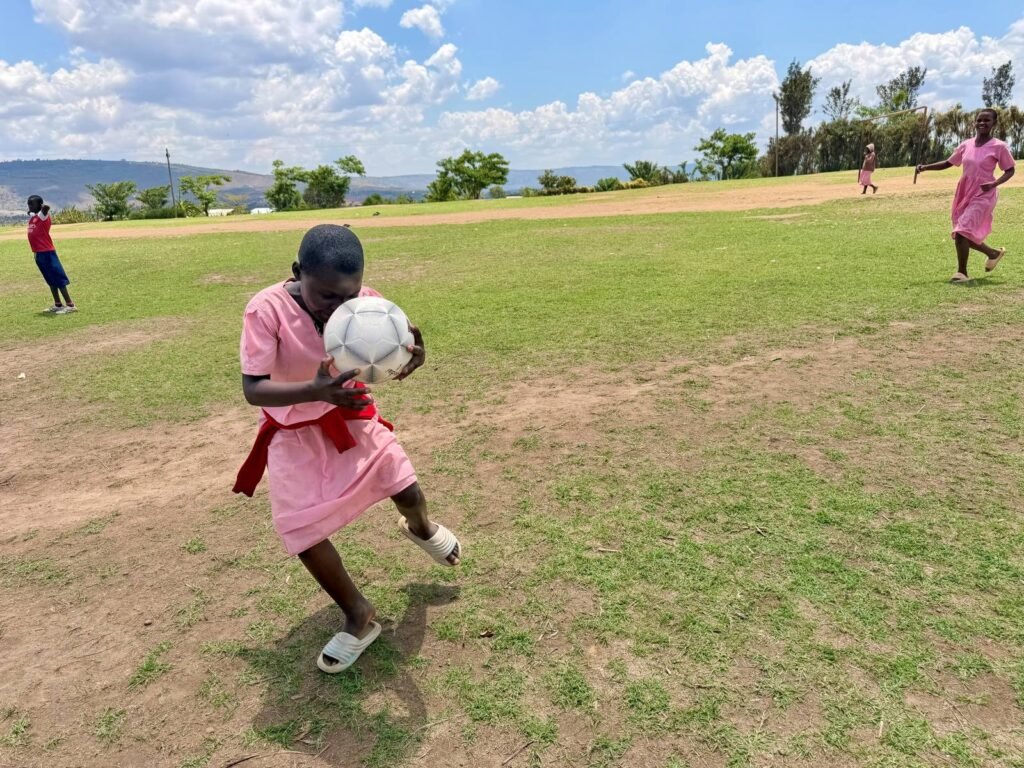
Before the teachers even arrive, Amani has already started. The 14-year-old gathers about four girls around her, and they begin a clapping game, a rhythm passed quickly from hand to hand. Amani is smiling the whole time.
At 11 o’clock, the children don’t need to be called. They already know it is time for TeamUp.
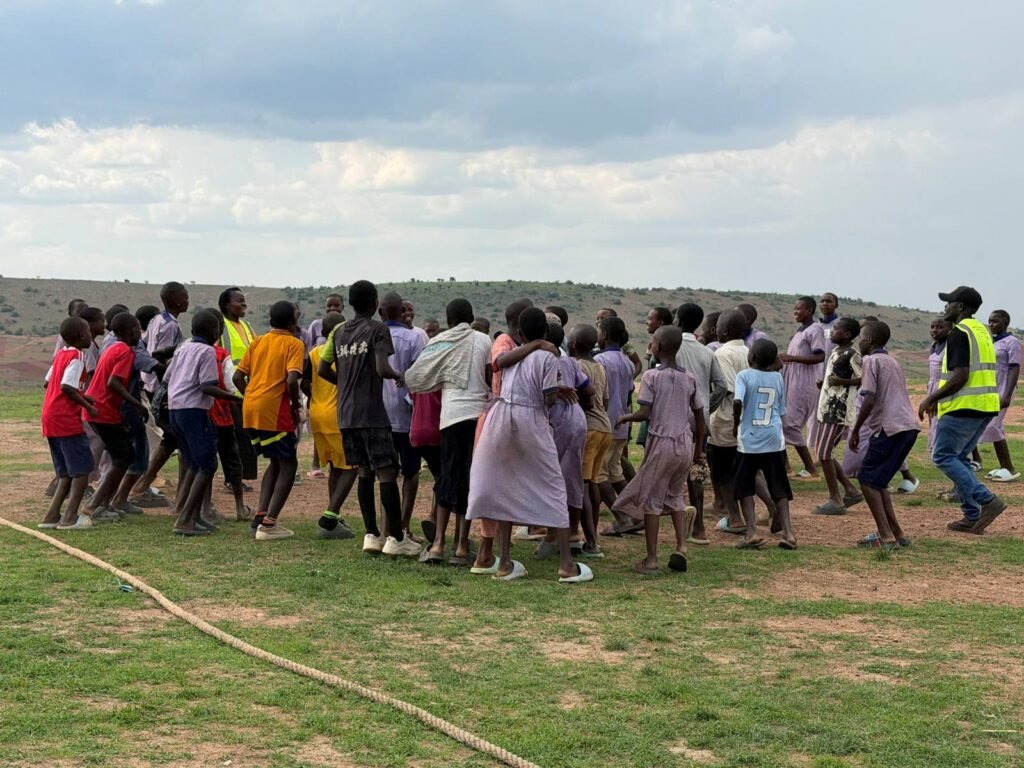
On the school field, two teams grip opposite ends of a rope. Everyone pulls with all their strength, feet digging into the ground, dust rising around them. Each time one side gives way, the winners erupt in shouts and laughter. A few children tumble over, get up and line up to go again. Amani is in the thick of it, still smiling.
Why routine matters
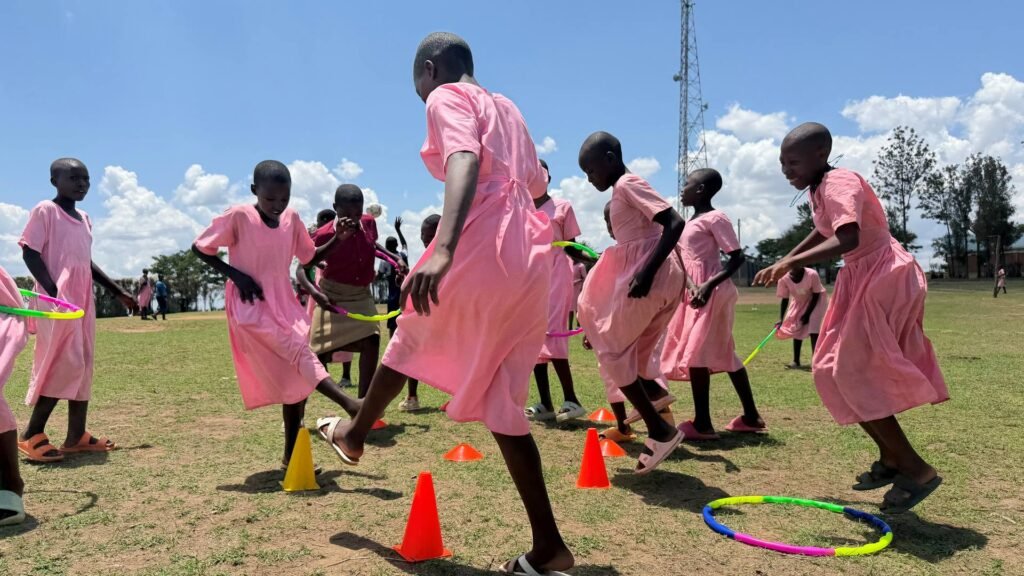
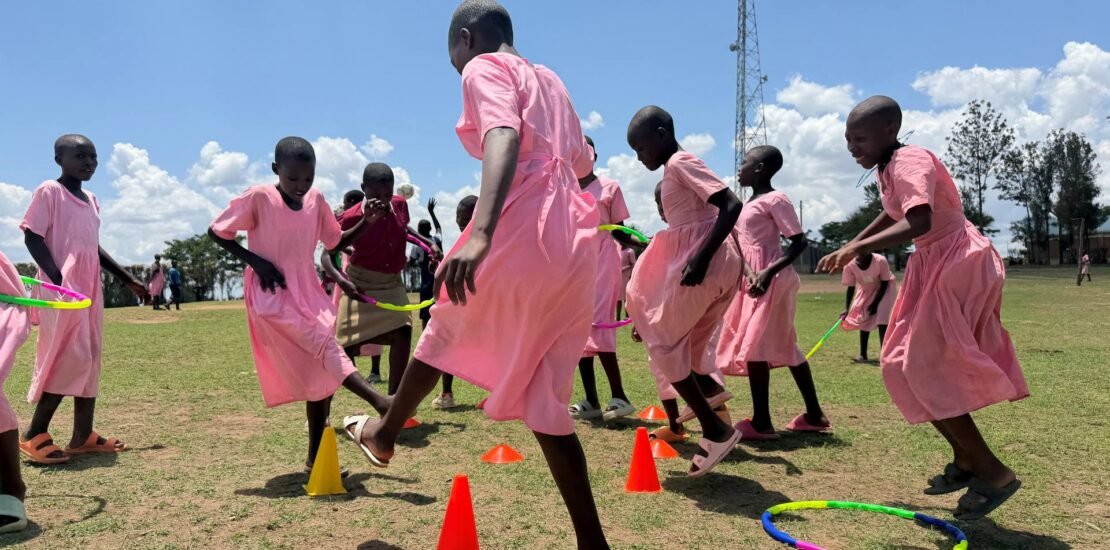
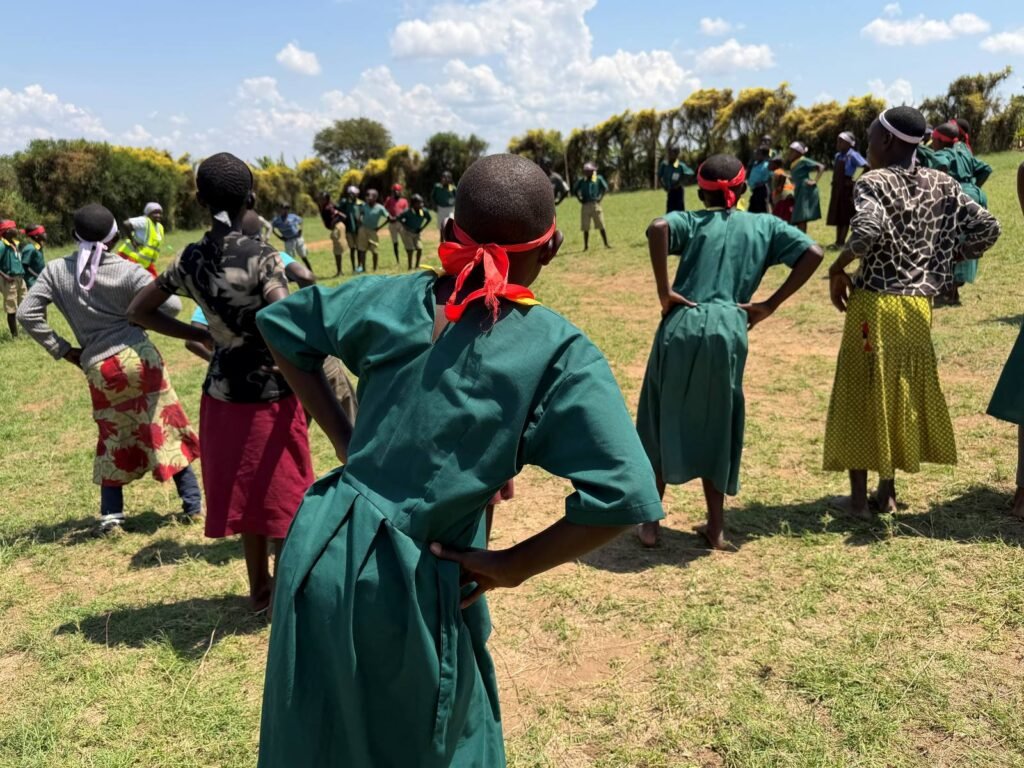
TeamUp is a structured psychosocial support approach that uses play, movement, dancing and singing to help children cope with stress, build friendships and develop skills for managing their emotions.
Sessions are held twice a week, with every child participating in a minimum of 21 sessions. The activities explore themes children encounter in everyday life, including friendship, fear, anger, bullying and assertiveness.
For children living with uncertainty and adversity, the regularity of the sessions can itself become important.
Abdul Karim Nshimyumuremyi has been a TeamUp facilitator coach for seven years. He is also a refugee, giving him a personal understanding of what it can mean for children to adjust to life in a new environment.
“In refugee settings, everything is new,” he explains. “When children know that every Thursday at this time there is TeamUp, they feel safe and protected with others.”
Children are not forced to participate.
“We ask, are you feeling OK? If you are not, we leave them,” he says. “But after two sessions, you find everyone is eager to come and play.”
The sessions also help facilitators notice when a child may need additional support. When they identify signs of distress or a protection concern, children can be referred to case management and specialised services.
What teachers see
Fred Tumwine, a sports teacher who also trains TeamUp facilitators, has watched the change move from the field into the classroom.
“There is a sense of unity and teamwork, a spirit of oneness, because host and refugee children are together,” he says. “Behaviour has improved. They become careful listeners. Even in class, they are attentive.”
Amani’s mother has noticed the difference at home too.
“Before, when you sent her, she would just sit,” she says. “Now when you send her, she hurries.”
Amani’s family is also receiving cash-for-protection support through the same project, to help meet the needs of children at risk.
More than a game
For Amani, TeamUp is one part of a wider support system helping children navigate life in Nakivale.
Through the LIFESPAN project, TeamUp has reached 2,378 children across four primary schools in Nakivale: Juru, Kabahinda, Nyakagando and Kashojwa.
Alongside TeamUp, the project provides case management and cash-for-protection support to children at risk, bringing together psychosocial support and protection assistance so that children can access immediate protection while also having safe spaces to connect, participate and build resilience.
For Amani, however, the future extends beyond the sessions.
She wants to become a doctor, so she can support her mother.
“I want to get money and help my family,” she says.
The LIFESPAN project is implemented by War Child and CARE with funding from the Uganda Humanitarian Fund (UHF).
Name changed to protect the child’s identity.
Physical Address:
5th Floor, Union House, Plot 78, Luthuli Avenue, Kampala.
Tel: +256 31 2258100
Thank you to all who supported us on this journey, including the untiring colleagues at CARE International in Uganda.