

CRISIS RESPONSE
How cash-for-protection support helped two mothers in Nakivale Refugee Settlement feed their children, get back to work and plan for the future.
By Norah Namono
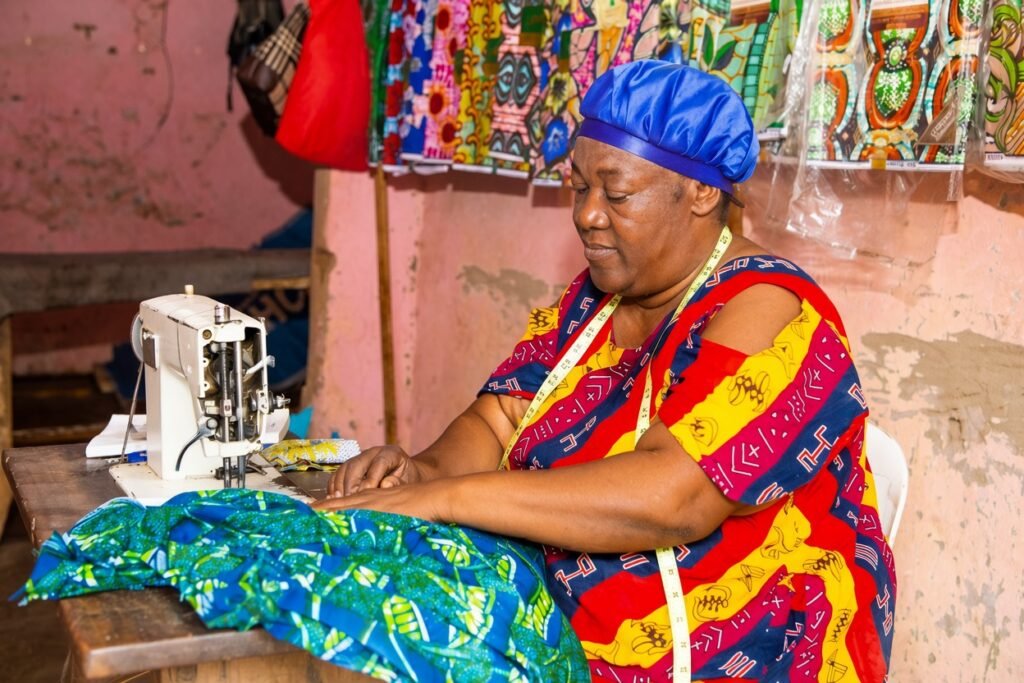
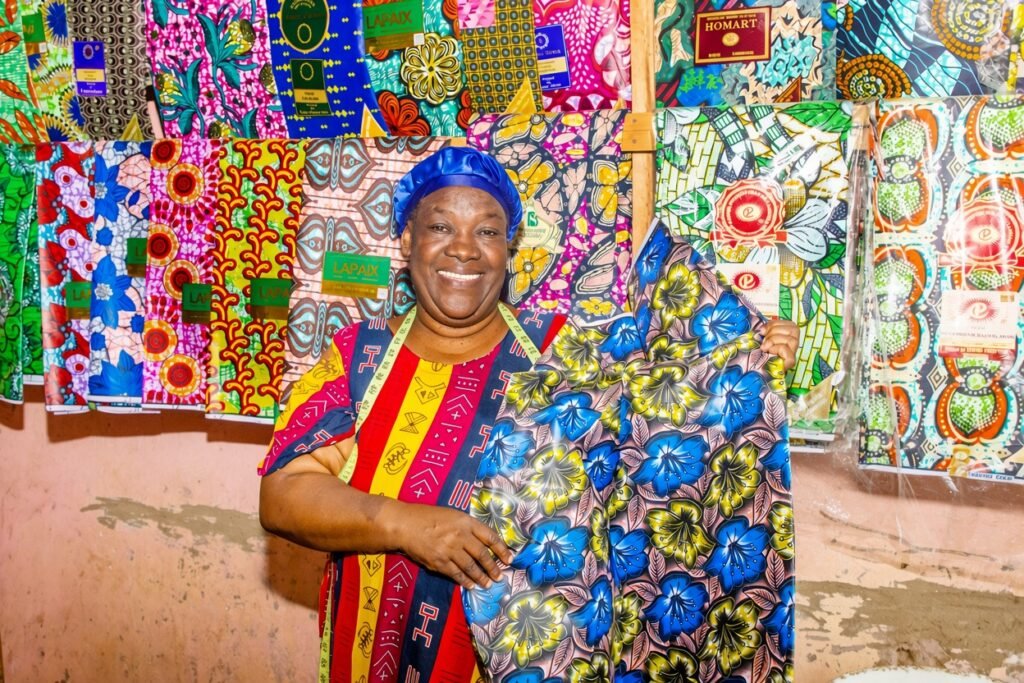
Along a path between a busy market and the food stalls, a row of small shops faces the road. Behind a pair of open metal doors, sunlight falls across the floor of a pink-walled room. Colourful fabrics hang along one wall. At a wooden table in the middle sits Shagali, 53, in a bright dress and a blue headscarf, her hands resting on a sewing machine.
Until September 2026, none of this was here.
That day, we were going to sleep without food
Shagali fled the Democratic Republic of Congo and has lived in Nakivale since 2016. In Congo, she worked as a tailor. She is a mother of 10. Most of her children are now adults with families of their own. Since her husband left in 2023, she has supported the household alone.
In 2025, the family’s assistance stopped, and hunger took over.
“Even getting a kilo of posho was hard,” she says. “We used to eat twice a day, but then we started eating once, or sometimes we went without food.” She remembers her children lying in bed, complaining of headaches from hunger. Without money for fees, keeping her youngest son in school was a struggle.
In August 2026, while waiting for treatment at Nyarugugu Health Centre III, Shagali heard other women talking about support for families in need. She went to the CARE office and shared her situation with a caseworker, who assessed her household and enrolled her for support.
In the first week of September, a message arrived on her phone: UGX 290,000, followed by a second payment of UGX 278,000.
“When I received it, I jumped,” she says. “That day we were going to sleep without food.”
The first thing she did was send a child to buy two kilos of rice, cooking oil, charcoal and cabbages. “I said, God is great.”
The rest of the UGX 568,000 went where the family needed it most: a school uniform, shoes and a school bag for her son in Primary Four, and UGX 15,000 in school fees; a sewing machine, rented for UGX 25,000 a month; two small rooms for her shop, rented for UGX 100,000; racks and materials worth UGX 150,000.
For now, she works in one room. The other is still empty.
She opens at 9 a.m. and closes at 8 p.m., an 11-hour day. In her first month, she has earned UGX 80,000. Business is still slow, she says, but when customers come, she can buy posho and beans. “I will manage the rent.”
I felt all my problems had disappeared from my head
Across the settlement, it is market day at Juru. Traders crowd the stalls in the afternoon sun. Rahab, 27, stands beside bundles of sugarcane, sorting the canes by size and price.
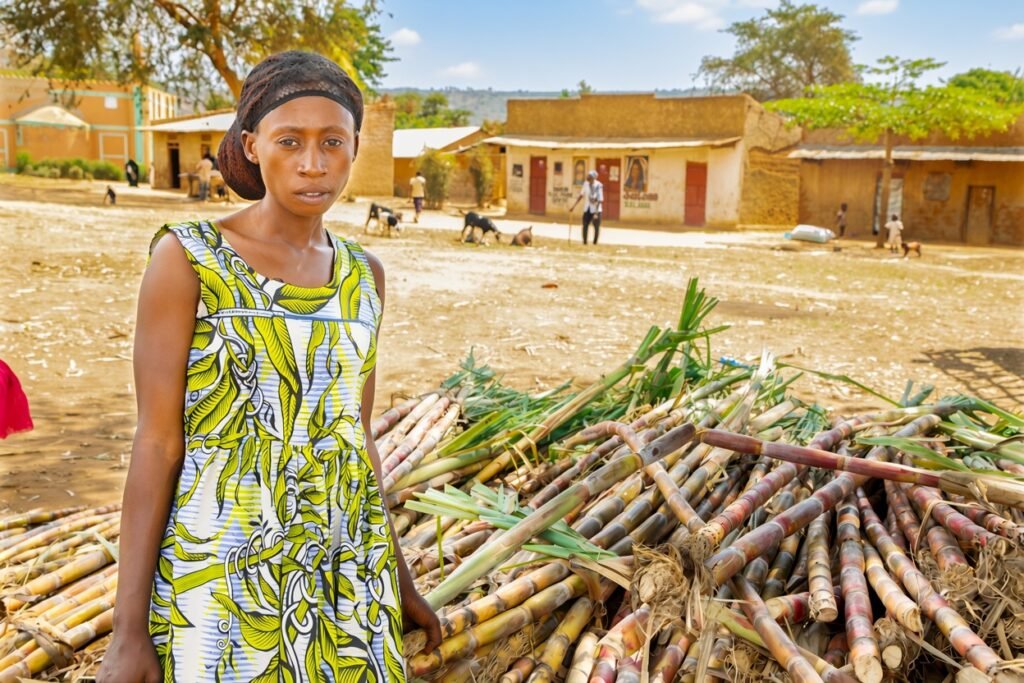
Rahab arrived from the Democratic Republic of Congo in 2023, alone with her two young children. Their father had died in Congo. At first the family received a monthly food ration of 12 kilos of maize, plus beans and cooking oil. Over time, the maize was cut to six kilos, then to three. Later the ration was replaced with UGX 12,000 in cash, and in April 2025 the assistance stopped altogether. Every morning, Rahab went to dig on farms in the host community to earn what she could. Then she came home to find that everything in the house had been stolen.
“I was confused,” she says. “My biggest problem was the house rent and feeding the children.”
Her neighbour, Esteria, a fishmonger, took the children in.
Caseworker Moses Nandaa learned about the family through the settlement’s child protection office. He went looking for them, first at the old rented house and then at Esteria’s home, where he heard the full story. When he met Rahab, he asked what would help her stand on her own. She had a plan: buy sugarcane in bulk when the truck arrives on Thursday evening, and sell it piece by piece at Friday’s market.
The support of UGX 500,000 was channelled through Esteria, who was caring for the children, and the two women agreed together how to use it: a new home for Rahab, stock for the business and the children’s needs.
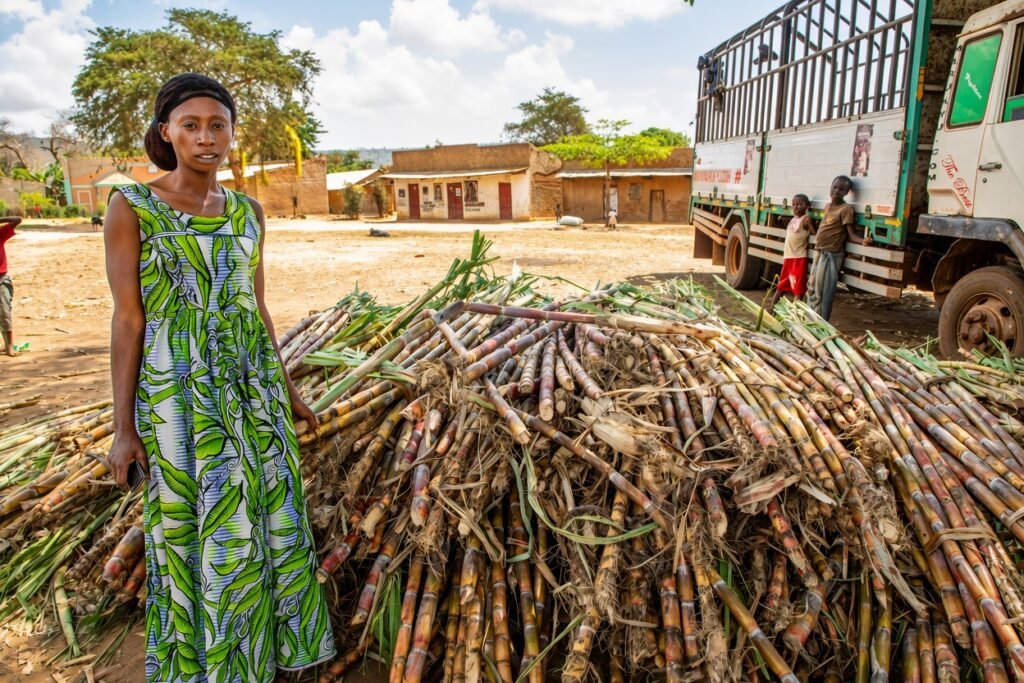
Rahab started trading in July with UGX 200,000 worth of sugarcane. A bundle costs her UGX 8,000, and she sells each cane for between UGX 400 and 1,000. Three months later, her stock is worth UGX 500,000. Each week she earns between UGX 20,000 and 25,000, saves UGX 6,000, and buys food to take to her children.
The children, now aged seven and five, have grown close to Esteria, so for now they still live with her nearby while Rahab visits and contributes. They are due to start school next term.
“Life has become better,” Rahab says. “It’s not the way it was, and I have hope.”
Protecting children at risk
Through the six-month LIFESPAN project, running from April to October 2026, caseworkers in Nakivale identify children aged 0 to 17 who face serious risks and support their families through case management and cash-for-protection. Children are referred by health centres, schools, TeamUp facilitators, community structures and partner organisations, and caseworkers follow up to see how the support is used.
Caseworker Charity Anyjjukire says the first step is listening. “We sit with them and ask what is the most challenging concern. It could be fees, food, children who have been abandoned, or those with disabilities who need something. It depends on what a child has.”
Since many families stopped receiving food assistance, she says, hunger has become the biggest challenge. “A child who is hungry can’t go to school.”
“The cash is meant to support children at risk,” says Robinah Kyambadde, MEAL Advisor at CARE Uganda, “where parents have no food to eat, children who are marginalised, like children with albinism, children of elderly caregivers, and children whose parents are survivors of gender-based violence.”
So far, the project has reached 1,086 people, children at risk and their caregivers, with case management and cash-for-protection in Nakivale, with UGX 250 million transferred to households caring for children at risk.
Looking ahead
Both women put their children first, and both are thinking about what comes next.
“I want my children to complete school and get jobs,” says Shagali. “And I want the business to grow.”
Rahab’s hopes are just as clear. “I want to get money to educate my children, get my own house, and stay with my children and look after them.”
The LIFESPAN project is implemented by War Child and CARE Uganda, with funding from the Uganda Humanitarian Fund (UHF).