

- November 12, 2026
- Posted by: WebAdmin
- Category: News
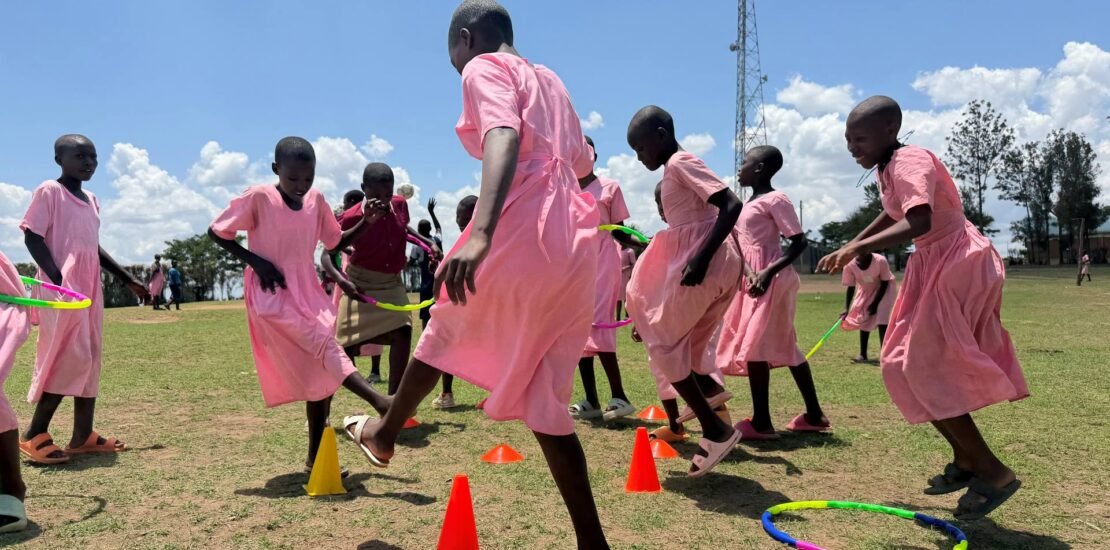
When Schools Feed Themselves: Five schools offer lessons in sustainable school feeding.
By Norah Namono
A two-year innovation pilot led by CARE International in Uganda has demonstrated how biodigesters, school farming and community participation can contribute to more self-reliant school feeding. At a Kampala learning and policy roundtable, stakeholders explored what it will take to sustain and scale the model beyond the five schools in Kyangwali Refugee Settlement.
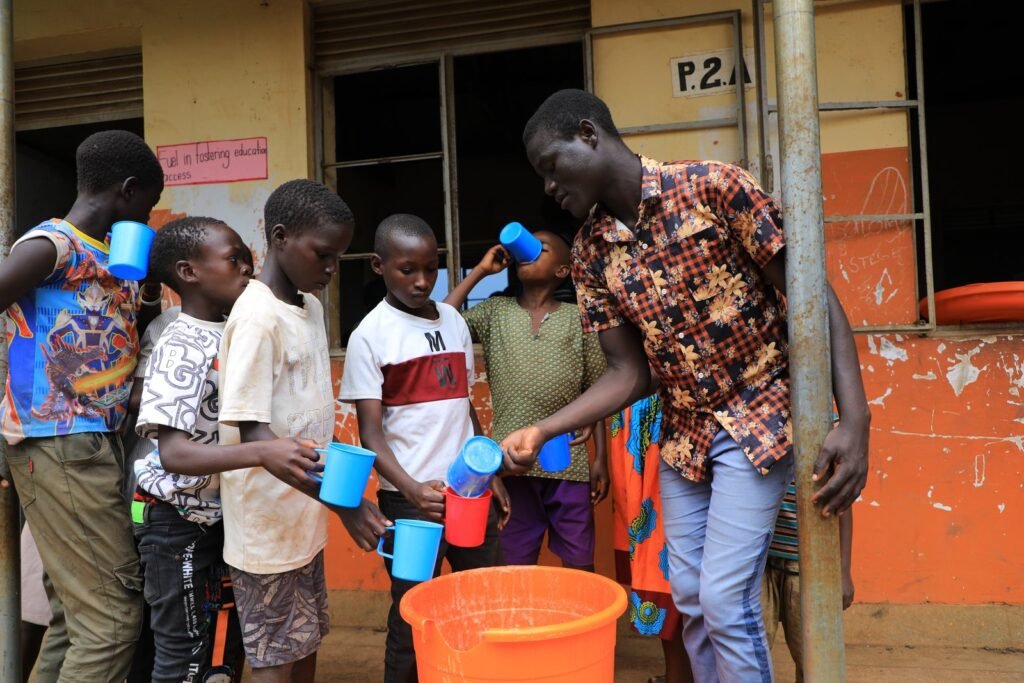
What if schools could turn their organic waste into cooking energy, use the by-products to improve agricultural production and grow more of the food they serve to learners?
This was the idea behind the Biodigesters for Agriculture and Nutrition in Schools (BANS) project, a two-year innovation pilot led by CARE International in Uganda in five schools in Kyangwali Refugee Settlement.
On 10 November 2026, CARE brought together government officials, head teachers, school representatives, donors, private sector partners and young influencers in Kampala for a Learning & Policy Roundtable under the theme When Schools Feed Themselves.
The gathering was an opportunity to examine what the five schools had achieved, reflect on what worked and what did not, and consider how the lessons could inform future school feeding approaches.
From seven acres to 32: What changed in two years?
When BANS began, the five schools had approximately 54 acres of available land, but only seven acres (13%) were cultivated. School feeding was limited, with about 110 learners receiving regular meals, while kitchens depended heavily on firewood and organic waste was largely unused.
The project tested whether biodigesters could become a catalyst for connecting waste management, clean energy, school agriculture and nutrition.
The results show significant progress:
- School feeding: Learners signed up for school meals increased from about 110 to 5,521.
- Agricultural production: Cultivated school land expanded from seven to 32 acres.
- Food production: The schools harvested 69,565 kg of maize and 8,456 kg of vegetables for school meals.
- Waste management: More than 100,000 kg of organic waste was managed and converted into cooking gas and fertiliser.
- Clean cooking: All five schools now have biodigesters supporting improved school kitchens, with firewood use and costs trending downwards.
The economic benefits are also becoming visible. A cup of porridge made using a school’s own maize costs approximately UGX 300, about half the cost of purchasing the same food.
The model connects four areas: organic waste, biogas for clean cooking, bioslurry for school farms, and the production of food for learners.
However, as the discussions in Kampala demonstrated, establishing the technology is only part of the solution.
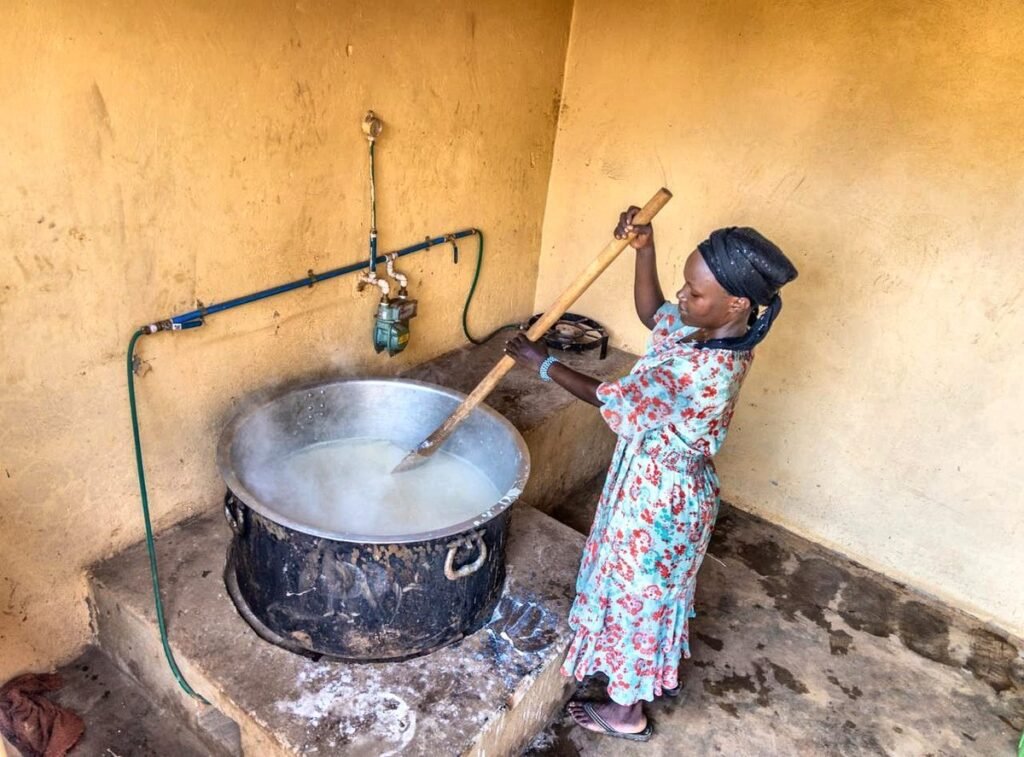
The technology works. Schools are what make it last.
Presenting the technical experience, African Muhangi, a Project Management Consultant with CARE, emphasised that biodigesters can work, but their sustainability depends on how schools and communities engage with them.
The transition from firewood to biogas, he explained, is also a cultural transition. Familiar cooking practices cannot simply be replaced by installing new equipment.
Feedstock presents another challenge. Biodigesters require a consistent supply of organic material, particularly animal waste, to operate effectively. Feedstock is not abundant, so schools need to look beyond what is immediately available within their compounds and explore practical, co-created ways of working with surrounding communities.
Community mobilisation has already demonstrated its value in some schools, where neighbouring livestock owners have contributed animals and manure to support the biodigesters.
The discussions also explored other possibilities, including crop residues, market waste, kitchen waste and Napier grass as alternative feedstock sources.
These experiences point to an important lesson: the success of biodigesters depends not only on the technology but also on reliable local resources, community participation and incentives that encourage continued use.
Interestingly, the value of the fertiliser produced through the biodigesters can be a stronger incentive for schools than clean cooking itself.
School farms also serve as practical learning spaces for climate-smart agriculture and nutrition. At Ngurwe, for example, the maize harvest grew from 200 kg to 3,500 kg, and some schools now cover more than 80% of their maize needs from their own farms.
Yet the project also identified an important nutritional challenge. Where schools begin with little or no regular feeding, increasing the number of learners receiving meals often takes priority over diversifying diets. Finding ways to improve dietary diversity remains part of the work ahead.
Moving beyond five schools: A challenge to the development sector
While the project demonstrated what is possible, one question remained central throughout the roundtable: how can the model reach more schools?
Apollo Gabazira, Country Director of CARE International in Uganda, challenged participants to think beyond conventional project cycles and reconsider how the development sector approaches scale.
He observed that the sector is operating in a significantly different funding environment, where organisations are increasingly expected to demonstrate deeper impact, accountability and value for money.
He questioned whether civil society organisations were doing enough to take successful approaches beyond individual projects. Scale, he argued, is not simply about securing more funding or finishing a project and signing off. It is about taking what works and applying it elsewhere.
He identified three areas requiring particular attention: scale, people and organisational culture.
Scale: Could BANS reach schools beyond refugee settlements? Apollo challenged organisations to move beyond traditional humanitarian and development boundaries and explore stronger engagement with the private sector, government and other actors.
People: He also questioned how organisations deploy their human and operational resources. BANS provided an opportunity to examine how meaningful results could be achieved without heavy logistical expenditure and what lessons the sector could draw from its implementation model.
Culture: Finally, he challenged INGOs to reconsider traditional ways of working in an environment increasingly demanding efficient, effective and integrated service delivery. He suggested that hybrid approaches combining the strengths of private sector organisations and INGOs could offer new possibilities.
He used the evolution of the post office as a cautionary analogy: institutions that fail to adapt risk becoming irrelevant as new ways of working emerge.
His challenge was particularly relevant to the BANS experience: successful innovations must not remain confined to the projects that introduce them.
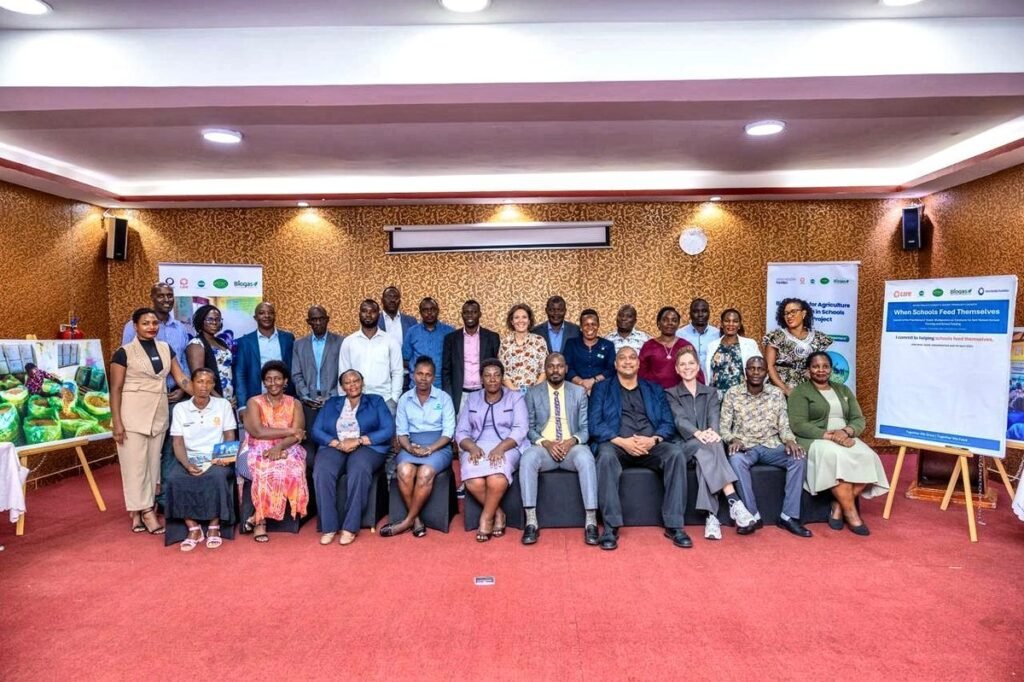
Taking the learning beyond the project
For CARE Uganda, the ambition was never simply to install biodigesters in five schools. The project was designed to test an approach, generate evidence and identify what would be required to take the learning further.
As Carol Thorsen of CARE Denmark explained during the presentation, the project set out to test four interconnected questions:
- Can schools secure enough feedstock and water locally?
- Can biogas replace firewood in a school kitchen?
- Can schools grow a meaningful share of their own, nutritious meals?
- Can schools run the system, and help sustain it themselves?
The experience has provided valuable answers, while also identifying areas requiring further investment, learning and innovation.
To make this knowledge accessible beyond the five participating schools, BANS launched the Practitioners’ Guide: Biodigesters as Catalysts for Self-Reliant School Farming and School Feeding.
The guide documents what worked, what did not and the practical considerations for institutions interested in adopting the model. Its eight chapters cover feasibility, whole-system planning, organic waste, biodigesters and bioslurry, school farms, management and sustainability, the business case, and financing and scale. A practical toolkit accompanies it.
Importantly, it emphasises replicating the whole system rather than simply copying the technology.
The guide is intended for head teachers, school management committees, cooks, teachers, farmers, biodigester operators, implementing organisations, government officials and donors.
The next chapter
BANS was an innovation pilot, not a finished blueprint. Its conclusion offers an opportunity to consolidate the evidence, strengthen partnerships and explore how the model can be adapted for other schools.
The experience of the five schools demonstrates that more self-reliant school feeding requires more than access to land or the installation of clean cooking technology. It depends on people, institutional ownership, community participation, appropriate financing and partnerships that can sustain the system.
For CARE International in Uganda and its partners, the challenge now is to ensure that the lessons from Kyangwali inform wider approaches to school feeding and contribute to practical solutions that can work beyond the project.
The project has ended. The learning, however, is only beginning.
What will it take for more schools to feed themselves?
Partners and acknowledgements
BANS was led by CARE International in Uganda, with funding from Novo Nordisk Foundation and partnership with CARE Denmark, AVSI Foundation, JESE (Joint Effort To Save The Environment) and Biogas Solutions Uganda.
CARE Uganda appreciates the contributions of these partners and the commitment of the head teachers, school management committees, parents, herders and learners at Maratatu, Kentomi, Ngurwe, Mombasa and Karuhinda schools, whose participation and ownership have been central to the initiative.
Physical Address:
5th Floor, Union House, Plot 78, Luthuli Avenue, Kampala.
Tel: +256 31 2258100
Thank you to all who supported us on this journey, including the untiring colleagues at CARE International in Uganda.
