

- November 26, 2026
- Posted by: Communications
- Category: Blog
By Norah Namono, Communications Lead, CARE International in Uganda
In Kiteere village, Fort Portal, Annet Bambuza Nantongo’s phone rings with a question she now hears often. “Where are you? Are you the groundnuts people?” One caller had first bought the group’s millet flour. They were sure the groundnuts would also be good. On most days, about ten customers call, and members deliver.
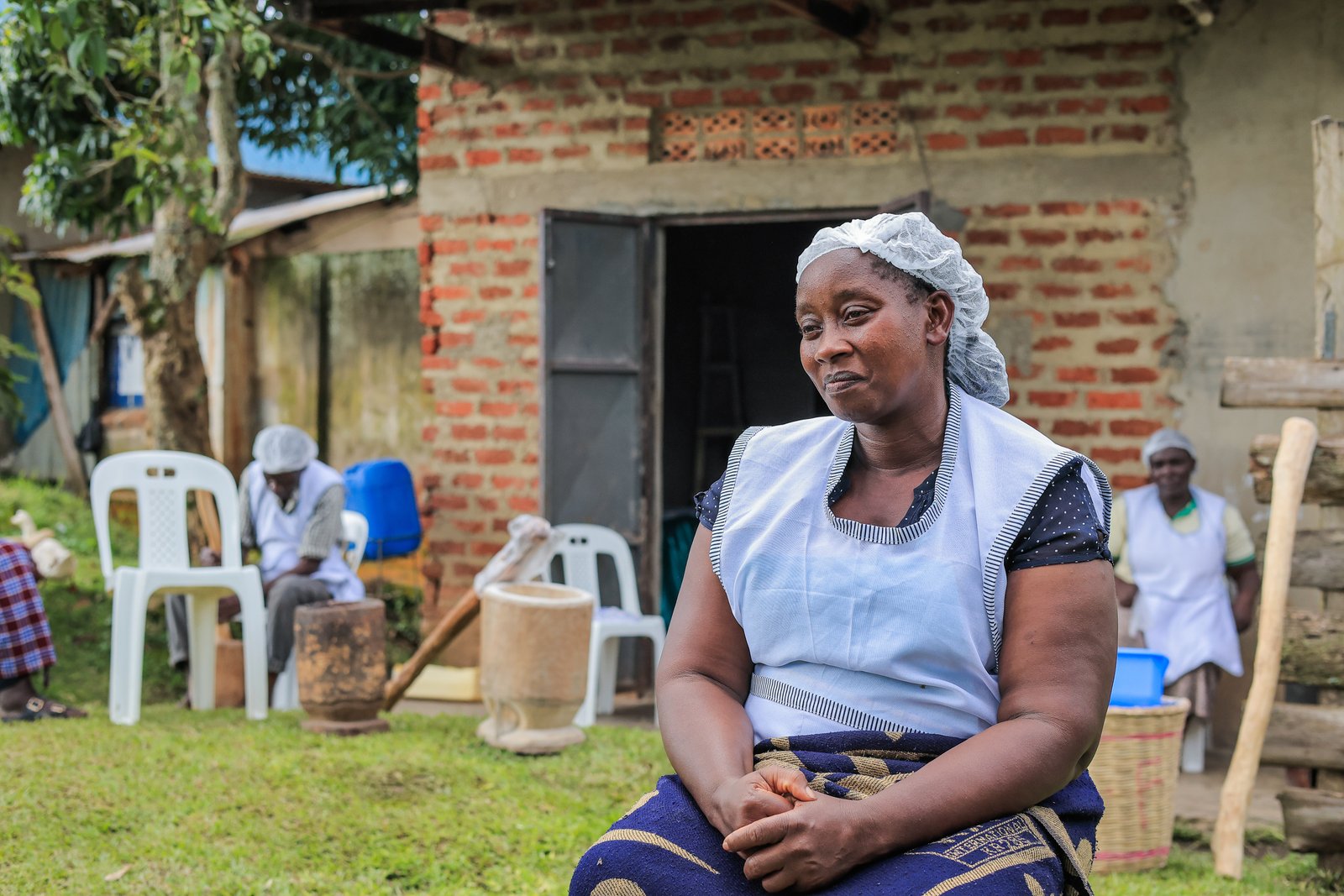
Annet, 48, has led Rise and Shine Community Group for years. Since August 2026, she has also been its woman mentor. She is raising six children and seven dependents. For nine years, she has run the canteen at Mpanga Secondary School.
From sharing out to building something together
Rise and Shine began in 2022 with seven members and a cash rotation known locally as Mpankuhe. In 2023 the members registered the group and began saving. At the end of the year, they shared out the savings and used the money for meat and clothes.
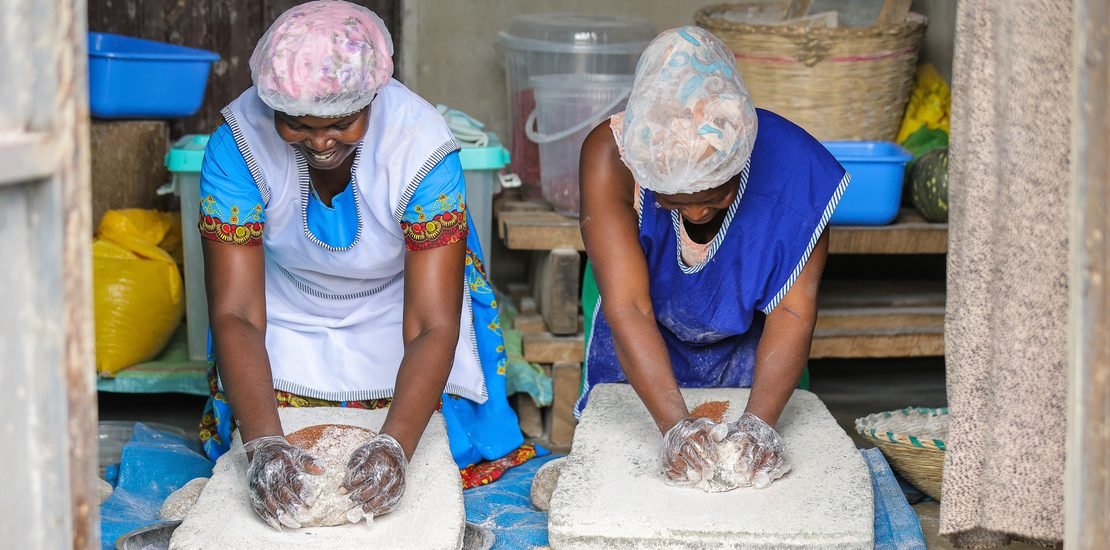
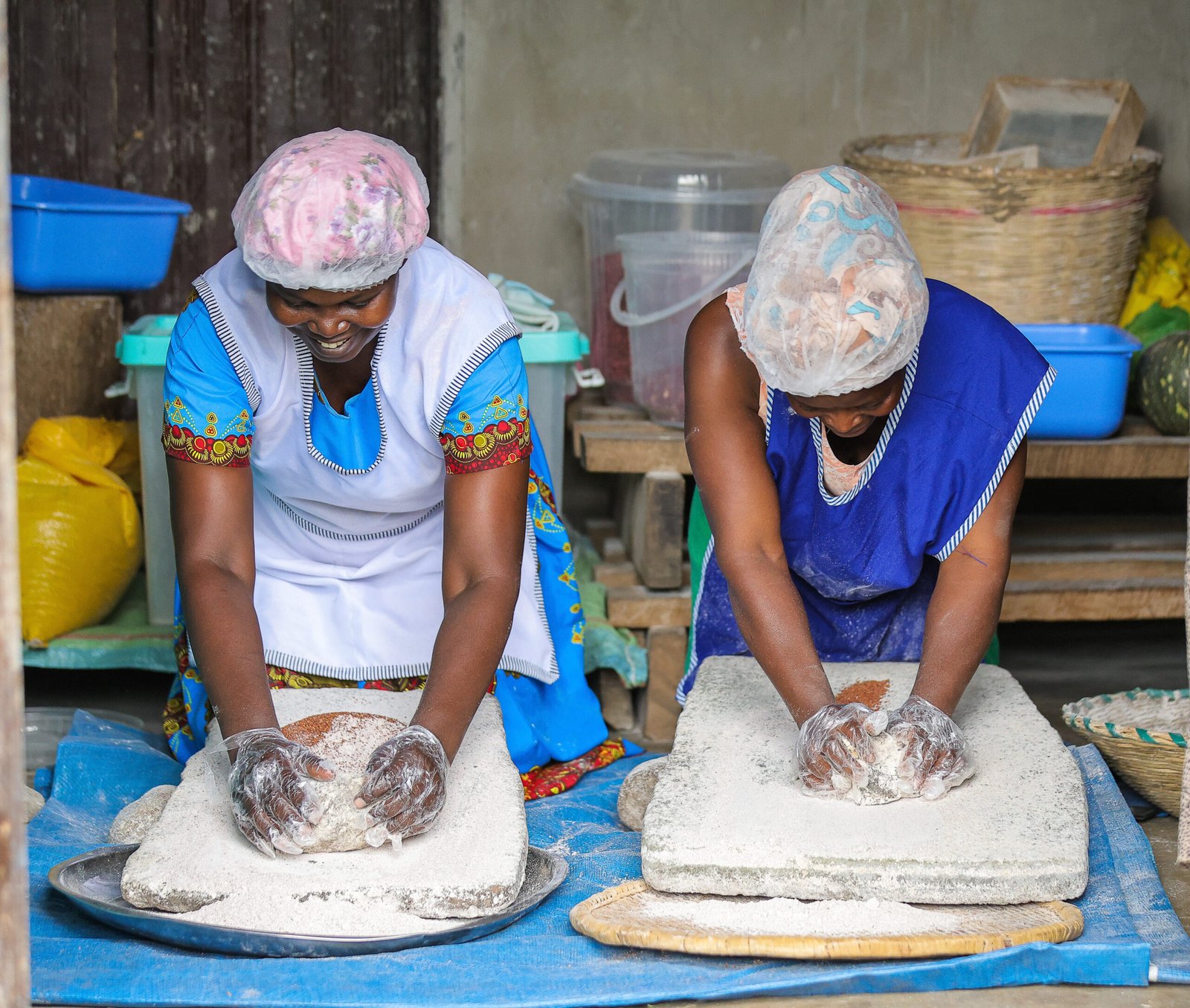
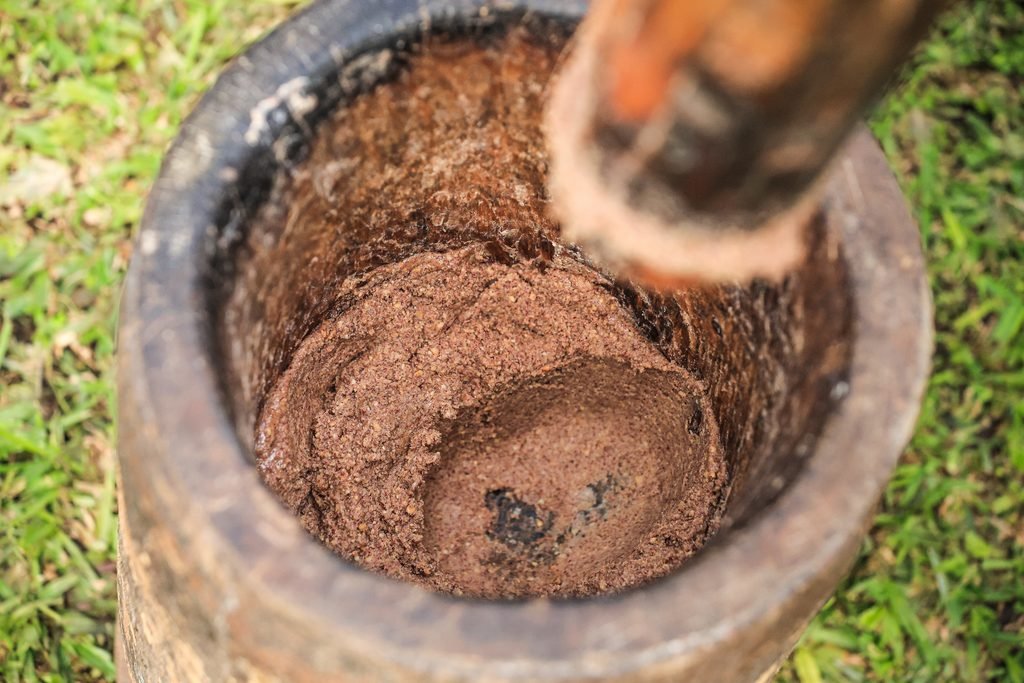
“The next year you find there is nothing bonding you anymore,” says Tusiime Julius, 48, one of the seven founders. The members wanted a business that would keep them together. Some proposed chickens, others piggery or farming. The idea that won came from their childhoods: grinding millet on a stone and pounding groundnuts until the oil comes out. “Machines wiped out these ancient methods,” Julius says. When members asked where they would get a grinding stone, he brought the one his grandmother had left behind.
Some worried that the process was too long for big orders. “We shall have created jobs,” Julius told them. The group grew to 47 members: 36 women and 11 men, six of them youth. But the business stayed a dream. Members saved only UGX 1,000 a week.
“We used to move things at our pace and knew no one was coming to help. We depended on the few skills I had,” says Annet.
“Learn and go and teach your friends”
In 2023, the group wrote to CARE asking for support for women, and Annet completed a two-month course by phone. In August 2025, Joint Effort to Save the Environment (JESE), one of CARE’s local partners, began training the group under the Her Money, Her Life project. Annet has attended ten trainings since. She started in Kyenjojo with business, leadership and sanitation. “They said learn and go and teach your friends,” she says.
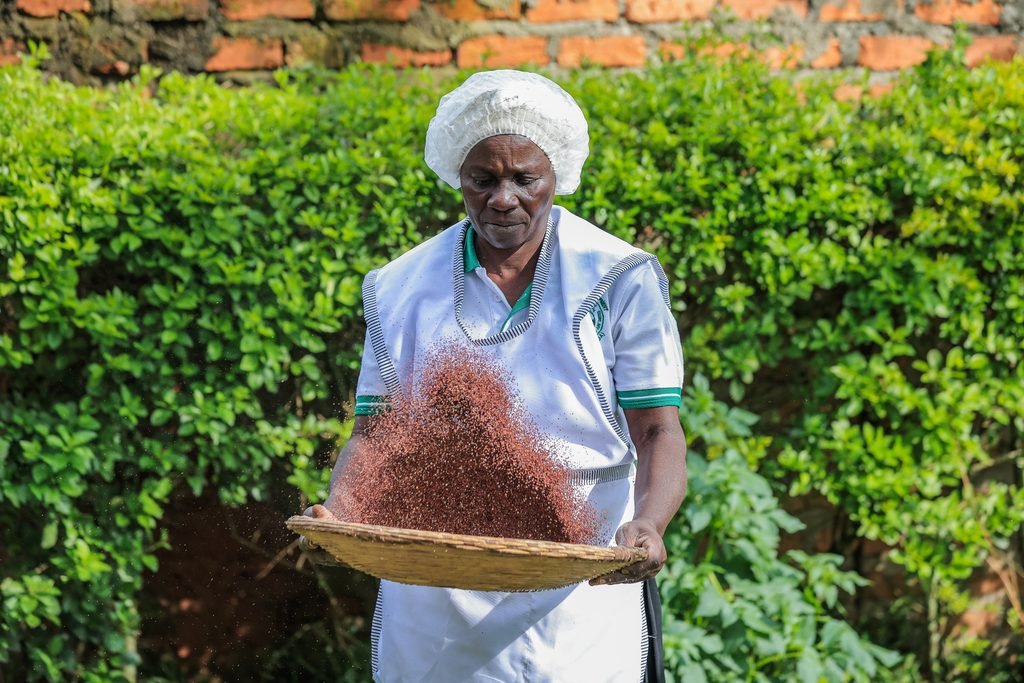
In September 2025, the members pooled their savings, bought 10kg of millet, 5kg of groundnuts and 5kg of soy, and made their first batch by hand. They made no loss, and the members themselves were the first customers. Annet began carrying the products to every training and selling them. At one training, she told a buyer that the group did not use machines. He bought 5kg anyway. On 13 October 2025, JESE invited the group to exhibit at the Rwenzori Indigenous Seeds and Food Fair. Most of their Fort Portal customers first found them there.
“Organic doesn’t start here. It starts from the garden”
In August 2026, JESE took Annet to a training of trainers in Lira. There, National Organic Agricultural Movement of Uganda (NOGAMU) identified the group. She came back with a new rule: no more groundnuts from shops, where no one knows how they were grown or handled. The group now buys from farmers it connected with through the training and records each farmer’s number on the receipt.
“I came back with energy, I realised we had only reached somewhere and not yet there.”
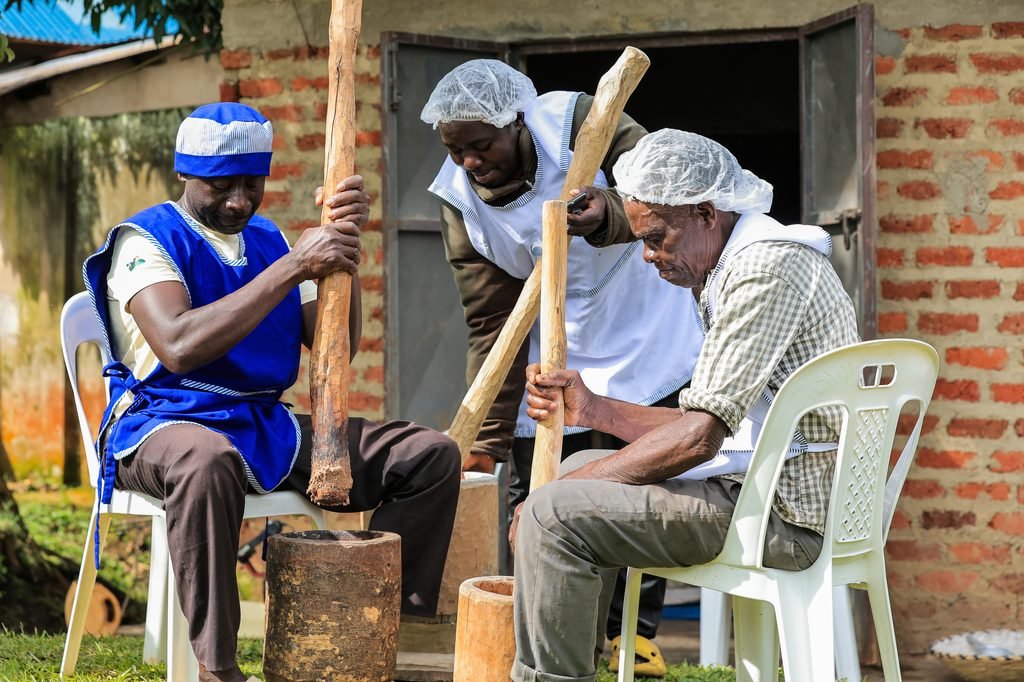
The group acted on each lesson. Members who once could not leave their homes and gardens now attend trainings too. Members voted Julius in as quality controller because the idea was his. He understands it. During production, he goes from station to station and can see when flour needs another round of sieving. “My responsibility was to show members what to do, and now I have to ensure that is what they are doing,” he says. The work is divided by strength: one day for roasting. Then each member takes a share of the groundnuts, such as 30kg, to finish.
In early October 2026, members contributed to rent a room, and they introduced new packaging. “When I brought the packs, we celebrated and were happy that we have reached somewhere,” Annet says. “We have never stopped celebrating when we get something new.” On 31 October 2026, NOGAMU trained groundnut and coffee farmers in Kabarole in making peanut butter and groundnut paste. Rise and Shine was one of two groups selected as winners, out of three. Members had put what they learned into practice.
Today the group makes millet flour mixed with cassava; kanuzire (“it is sweet”), a porridge flour of millet, pumpkin and soy; kyomuka (“from home”), groundnuts for sauce; groundnut paste; and peanut butter. Soya coffee is next. Everything is pounded or ground by hand.
What changed in a year
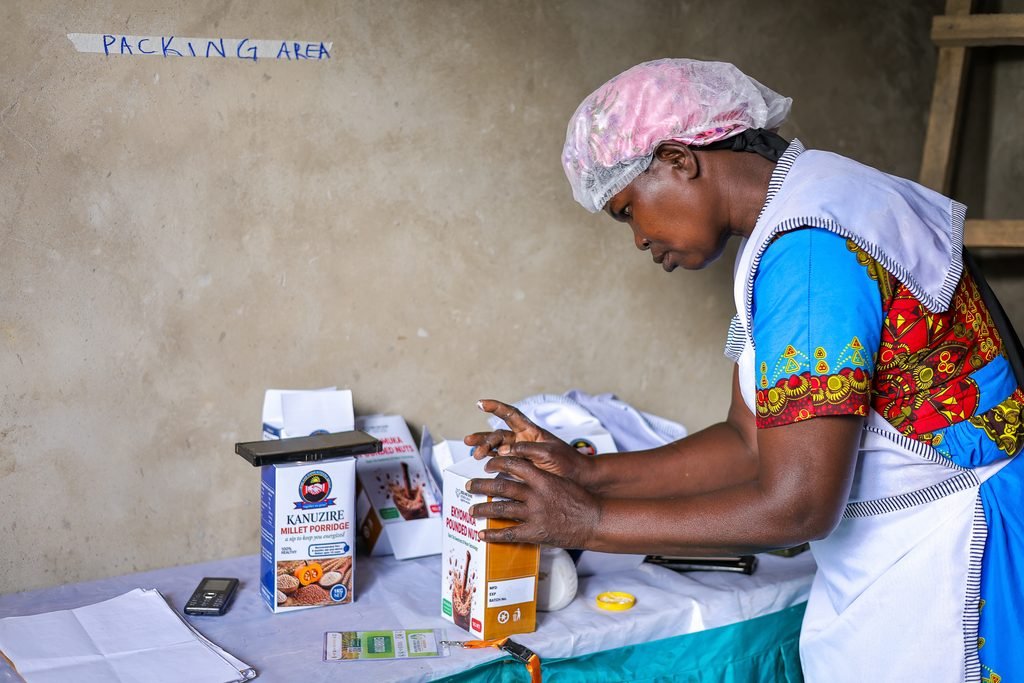
Before September 2025, the group produced nothing. Today it sells at least 10kg every week. A kilo of groundnuts sold for UGX 12,000 at the start. It now sells for UGX 13,000 because costs have risen. Kanuzire sells at UGX 10,000 a kilo, and millet flour sells at UGX 8,000. “We can’t finish a week without selling 10kg,” Annet says. “We are now thinking: how do we sell 50kg?”
Members who once saved UGX 1,000 a week now save between UGX 5,000 and 25,000. “Now we are at a high level,” Annet says.
For Annet, the biggest change is in herself. “I got self-esteem. I believe in myself. My no is no and my yes is a yes,” she says. It has changed her home too. “Before the trainings, I was selfish in my house. I would say this is a woman’s money, and a man would see you differently. But now, even if it’s a woman’s money, I can also go and do shopping. And you can then save for a bigger dream. The trainings have shaped me.”
“The respect starts here”
Julius spent many years riding a boda boda on William Street in Kampala. A radio program on livestock changed his mindset, and in 2023 he returned to the village. He started with five local chickens, which grew to 100 birds, then two pigs, and now many more.
He says the group has changed how its men see women. “As men in Rise and Shine, we appreciate being led by a woman and want more men to come and join. We learn a lot from them, and even habits at home change,” he says. “Our chairperson talks to us and tells us how to behave and respect our women, starting here in the group. So the respect starts here, and then we go to our homes. Some of us did not value women working, but now we appreciate it. If I go back home and my wife is not working, then that is a problem. At home, my family is now beginning to be happy. Profits from the group help pay school fees.”
The next step: the Q-Mark
Without the Uganda National Bureau of Standards (UNBS) quality mark, the group’s products cannot go on supermarket shelves. UNBS issues the Q mark as official product quality approval, and it allows manufacturers to use the Uganda Standards Certification Mark once their products meet the relevant national standards.
In October 2026, JESE took Annet to another workshop, a roundtable for entrepreneurs at the Uganda Industrial Research Institute in Namanve, Kampala.
“We did not sell, but sat with serious people, and I was one of the few people who spoke. We might have good products, but cannot afford the UNBS fees.”
Says Annet.
NOGAMU has since advised the group, and last week UNBS took it through the standard. It now meets 60% of the safety requirements. It is starting with millet porridge flour, which NOGAMU tasted and advised them to lead with. UNBS recommended a stainless-steel grinding machine because grinding on stone takes a lot of time and energy. The group also wants a place in town, so customers can find them.
“The day we have a Q mark, we shall enter markets which have limited us,” Julius says. “Some people ask, do you have a Q mark? That is our cry.”
Annet’s advice to other groups is to look for a venture, not only savings. “When you are not in a group you are alone, but when you are in a group, that is a family,” she says. “Every woman, or anyone, can be of value, but you can’t do that alone. You can go to a training and enhance yourself. You can expose yourself through groups and wake up when you are of value to the community and your nation.”
The group’s motto says the same: Together we can.
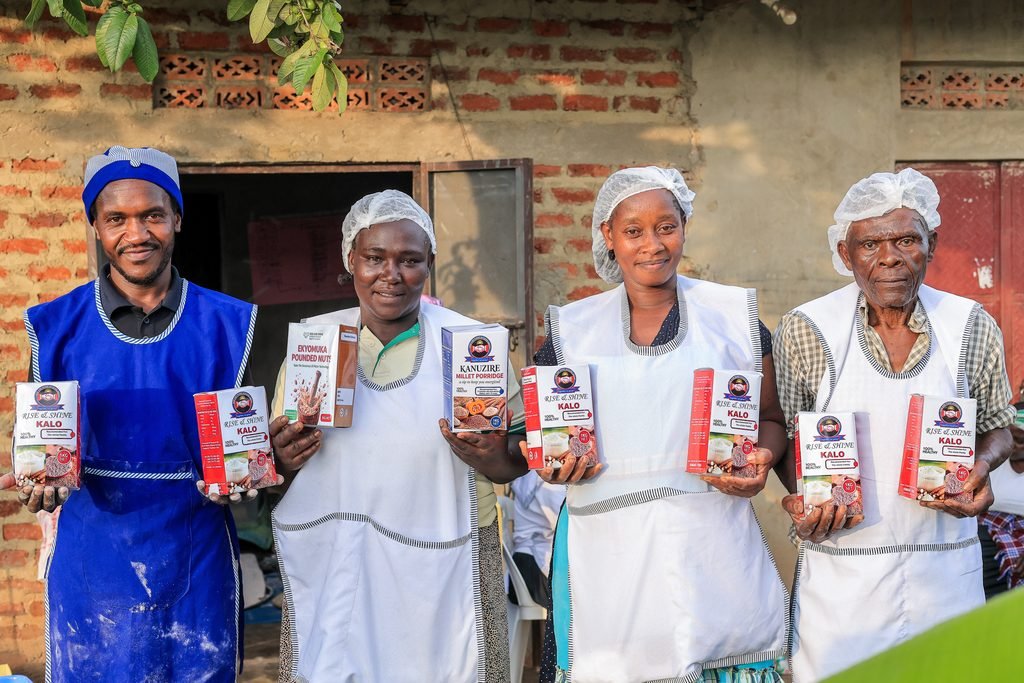
Rise and Shine is one of the projects supported by Her Money, Her Life. This is a one-year women’s economic empowerment initiative (January to December 2026), implemented in Uganda by CARE International in Uganda with partners JESE, APSEDEC, APROCEL, NOGAMU, Market Voice, Ensibuuko and gnuGRID, with support from Bloomberg Philanthropies through Panorama Global.
